Building a Connection with Clients Before the Big Day
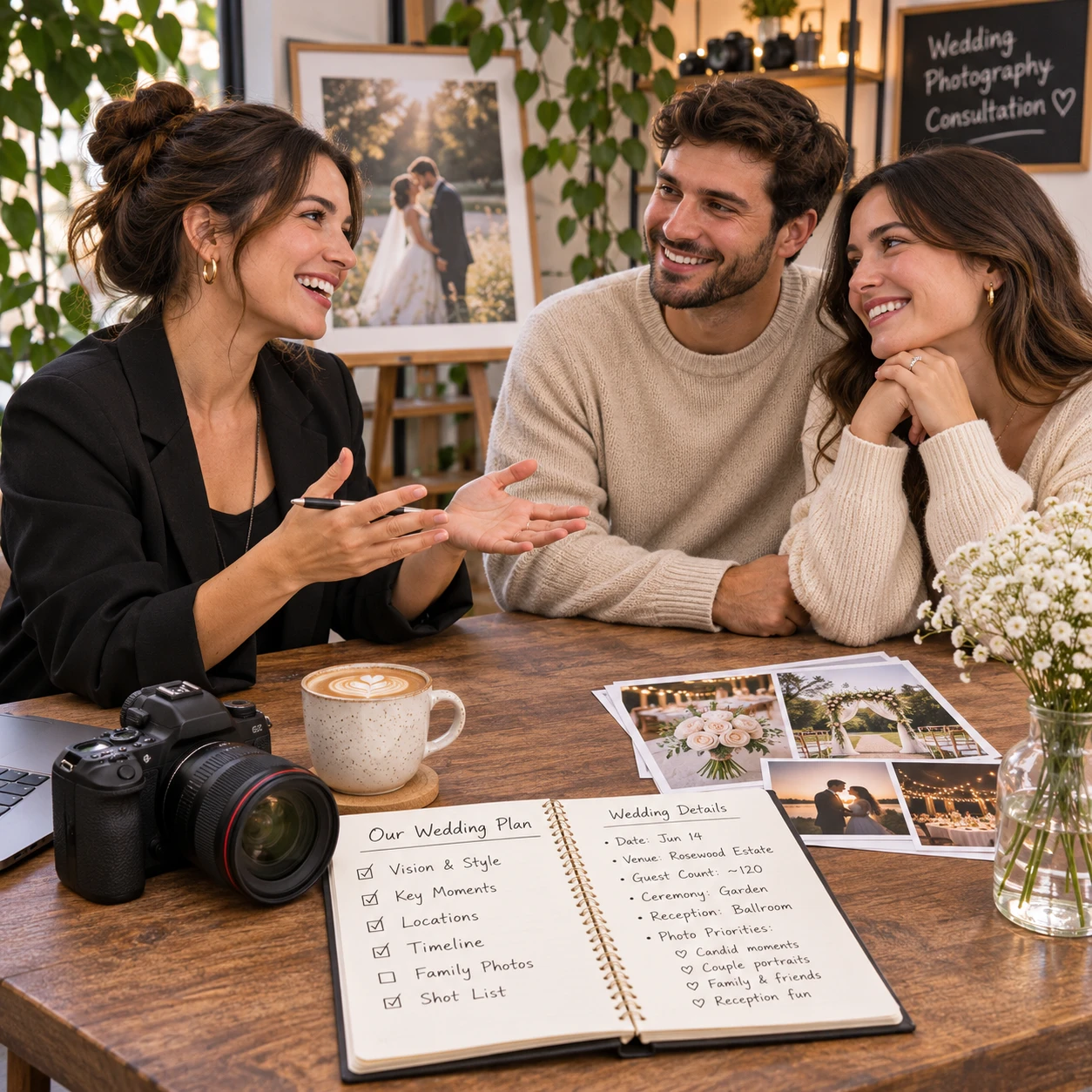
A wedding photographer’s relationship with a couple begins long before the first photograph is taken. When clients feel listened to and know what to expect, they are more likely to relax, share what matters to them, and trust you to respond naturally as the day unfolds.
That connection is built through small, dependable actions: a welcoming pre-wedding consultation, clear communication, thoughtful questions, and a plan that leaves room for real moments. These steps do more than help the photographer prepare. They help the couple feel seen rather than managed.
Start with a Personal, Welcoming Consultation
A personal pre-wedding consultation helps a wedding photographer understand the couple’s priorities and gives clients room to ask questions. Begin with curiosity, then use what you learn to shape the experience around them.
Meet in person or by video, and set aside time for conversation rather than treating the meeting as a checklist. Ask how the couple met, what they are looking forward to, and which parts of the wedding feel most meaningful. The answers may reveal that a quiet first look matters more than a long list of formal portraits, or that a grandparent’s presence is central to the day.
Listen for practical concerns, too. One partner may feel uneasy being photographed, while the other may be worried about keeping family photos organized. Acknowledging those concerns early makes it easier to plan calmly and shows the couple that their comfort is part of the job.
- Ask what they want their wedding photographs to help them remember.
- Find out how they prefer to communicate and who should receive planning updates.
- Explain how you work, including how you guide portraits and handle candid moments.
Keep the conversation collaborative. A consultation is not a pitch or an audition; it is the start of a working relationship based on trust and rapport.
Keep Communication Clear and Consistent
Clear, consistent communication builds confidence by helping couples know what has been decided, what still needs attention, and when they will hear from you again. Be responsive, direct, and steady without adding unnecessary messages to an already busy planning process.
Agree on a practical communication rhythm. For example, confirm the next planning checkpoint after booking, then check in as the wedding date approaches. If you need details for the schedule or family portraits, ask early and explain why. A short, specific question is easier to answer than a vague request to send over anything relevant.
When a couple asks a question, answer it plainly. If you need to confirm a detail, say when you will follow up rather than leaving them to wonder. If a change affects coverage or timing, explain the options and any trade-offs. Reliability is built in the ordinary moments: a promised reply arrives, a meeting starts on time, and an agreed detail appears in the plan.
Use a shared document or email summary for decisions that need to be revisited, such as portrait locations, contact details, or coverage hours. Keep the information organized, but avoid sending a flood of reminders. The goal is to make communication feel supportive, not like another task the couple has to manage.
Ask the Right Questions About Their Vision
Thoughtful questions and a photography questionnaire help a photographer understand a couple’s visual preferences, family dynamics, and must-have moments. Ask about the feeling they want their gallery to preserve, not only the poses or images they have saved.
A questionnaire can cover the essentials before a planning call, leaving more time to discuss answers that need context. Useful prompts include:
- Which photographs or parts of the day matter most to each of you?
- Do you prefer candid images, gentle direction, formal portraits, or a mix?
- Are there family relationships or accessibility needs I should know about?
- Are there sensitive situations, recent losses, or people who should not be photographed together?
- What details, traditions, or cultural practices should I understand before the wedding?
For inspiration images, ask what the couple likes about each example. It could be the light, the composition, the emotion, or simply the relaxed mood. This helps translate a reference into a preference without promising an exact replica. Their venue, weather, schedule, and people will be different.
Turn answers into a short working brief. Separate must-have moments from nice-to-have ideas, and flag sensitive family details privately. A shot list should guide attention, not dictate every frame; too rigid a list can pull the photographer away from spontaneous moments that make the gallery personal.
Help Couples Feel Comfortable in Front of the Camera
An engagement session gives couples a low-pressure chance to get familiar with the photographer and the camera before the wedding. It can ease camera anxiety, although it is an option rather than a requirement for building rapport.
Explain what the session will feel like: a walk, a conversation, and occasional gentle direction rather than an extended series of stiff poses. Choose a location where the couple can move comfortably, and ask what kind of guidance they prefer. Some people enjoy specific prompts; others relax when given space to interact naturally.
During the session, demonstrate simple adjustments instead of correcting every detail. Invite the couple to walk, talk, or pause together. This gives them something familiar to do and helps them learn how you communicate. Afterwards, ask what felt comfortable and what they would change on the wedding day.
If an engagement session does not fit their budget, schedule, or preferences, offer a brief portrait practice during a consultation or venue visit. Even a short conversation about where they will stand and how you will guide them can make the first wedding-day portraits feel less unfamiliar. The important part is familiarity, not a mandatory photo session.
Align on Expectations and the Wedding-Day Plan
Clear expectations about deliverables, group photos, the wedding timeline, and possible changes prevent avoidable surprises. Review the plan together and distinguish what is confirmed from what may still shift.
Make sure the couple understands the agreed coverage hours, image delivery process, and what is included in their package. Explain how you approach group portraits and how much time they may need. For family photographs, ask the couple to identify groupings and appoint a trusted helper who can gather relatives. The photographer can direct the images, but should not have to guess which family members belong in each combination.
Build the photography schedule around the wedding’s real priorities. Consider travel between locations, ceremony restrictions, light, and time for the couple to enjoy their guests. A packed timeline may leave little room for portraits or delays. On the other hand, adding an oversized shot list can turn a joyful day into a sequence of instructions. Agree on the essential images, then preserve breathing room.
Discuss a simple plan for changes: who will contact you if the ceremony runs late, where you can take portraits in rain, and who can make decisions if the couple is occupied. A flexible timeline is more useful than a perfect-looking one. It gives everyone a shared reference without pretending that a wedding day will run exactly to the minute.
Create a Relationship That Carries Into the Wedding Day
A strong pre-wedding relationship helps the couple feel calmer and lets the photographer work with greater awareness on the wedding day. The result is a more natural experience, shaped by shared expectations and genuine familiarity.
Before the event, review the couple’s questionnaire, agreed shot list, timeline, and any sensitive notes. Confirm the arrival time and key contacts. On the day, use what you learned: offer direction in the way they prefer, watch for the moments they told you matter, and check in when plans change.
Trust does not mean the photographer can anticipate every need. It means the couple knows they can ask for help, raise a concern, or simply be themselves without performing for the camera. If the schedule slips or an expected moment changes, communicate calmly and offer a practical next step.
The most useful measure of pre-wedding connection is not how many calls or forms were completed. It is whether the couple feels understood and knows what to expect. Thoughtful listening, clear follow-through, and a flexible plan give them room to be present, while helping the photographer create images that feel like their wedding rather than a template.
Frequently Asked Questions
When should a wedding photographer first meet with a couple?
A first conversation should happen before the couple commits, so both sides can discuss expectations and working style. Hold a more detailed pre-wedding consultation after booking, then revisit key plans as the wedding approaches.
Is an engagement session necessary to build rapport?
No. An engagement session is useful practice, but rapport can also grow through a consultation, consistent communication, and a clear portrait plan. Choose the option that suits the couple’s comfort, budget, and schedule.
What should couples share with their photographer before the wedding?
Share the wedding timeline, venue and travel details, family photo groupings, must-have moments, style preferences, and any cultural, accessibility, or family considerations that affect photography. Also identify a reliable day-of contact.
How can a photographer help camera-shy clients feel comfortable?
Ask what makes them uneasy, explain how you will guide them, and offer simple prompts or movement instead of demanding elaborate poses. A relaxed practice session can help, but respectful communication and room to be themselves matter just as much.