How to Pose Couples for Engagement Sessions That Feel Genuine
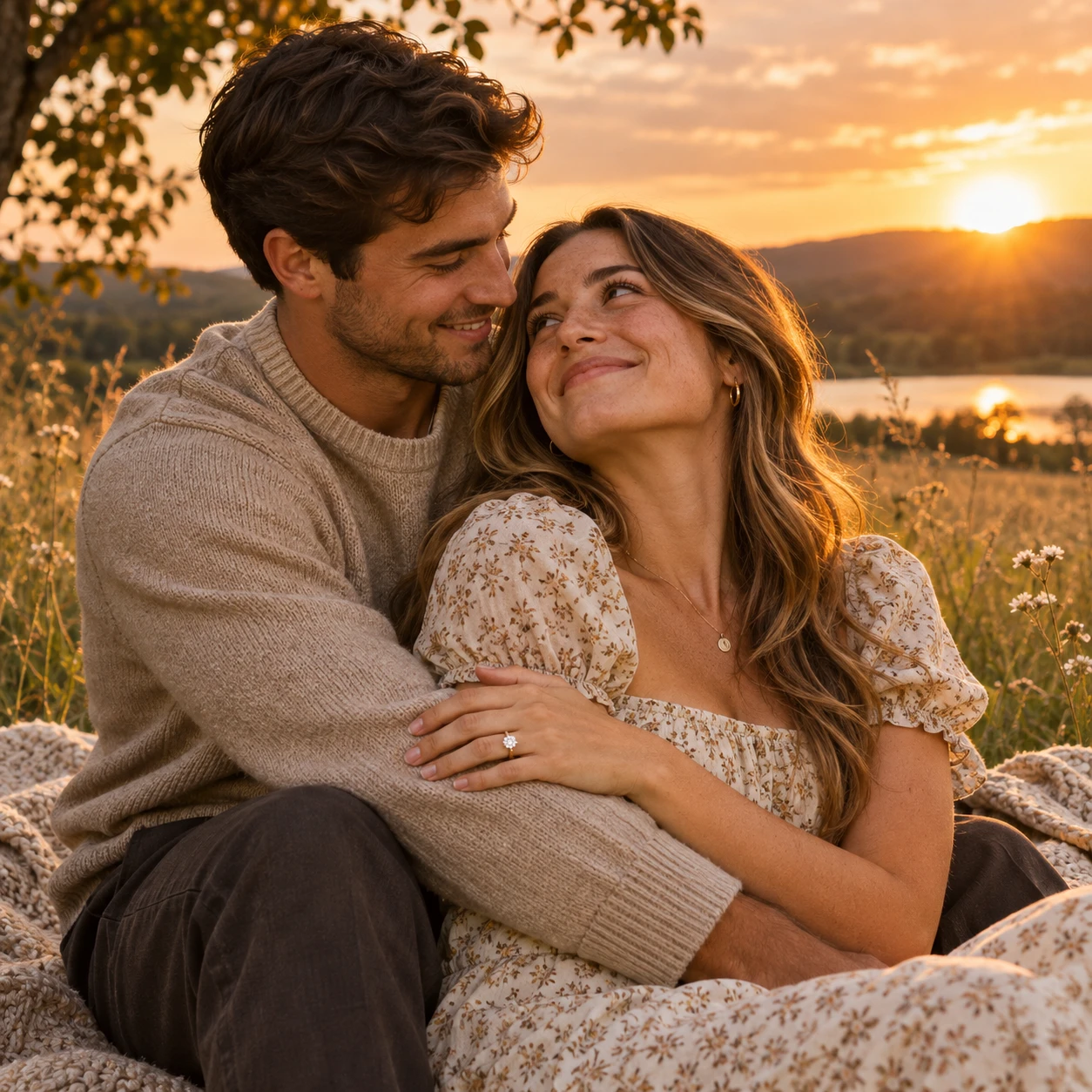
Engagement photos feel genuine when couples have room to interact, not just hold a pose. A photographer’s job is to offer clear, comfortable direction, then watch for the connection and expressions that make each relationship feel like itself.
That balance matters: too little guidance can leave people wondering what to do, while too many instructions can make them self-conscious. The ideas below help you build an engagement session around comfort, natural prompts, body language, movement, and the couple’s surroundings.
Start with comfort, not perfect poses
To help couples relax, begin with conversation and an easy activity rather than asking them to hold a polished pose. A comfortable start gives them time to adjust to the camera and to each other.
Before shooting, explain how the session will flow and remind the couple they do not need to perform. Ask what kinds of photos they enjoy and whether any poses or types of touch feel uncomfortable. This is useful direction, not a formality: comfort and consent shape which prompts will work.
Start with a low-pressure task, such as walking side by side while chatting or standing together and looking around the location. Keep the camera moving, but let conversation continue between frames. If a couple seems tense, lower the pace and offer reassurance without making their nerves the focus.
Make the first task easy to succeed at. For example: “Walk toward that tree and tell each other what you’re looking forward to this week.” The action gives them something to do, and the conversation can create expressions that feel more personal than a request to smile.
Give prompts instead of rigid instructions
Natural prompts give couples a clear action or interaction while leaving room for their own expressions. They create direction without requiring both people to copy a fixed pose.
Use prompts that invite a real response, then allow a little silence for the moment to unfold. You might ask one partner to whisper a favorite shared memory, tell the other what they first noticed about them, or make them laugh without using a familiar joke. Avoid demanding a particular reaction; not every prompt will land, and that is normal.
- “Walk together and let your conversation wander.”
- “Take turns choosing which way to go.”
- “Tell your partner one small thing they do that you love.”
- “Pause and look at each other before you start walking again.”
Photographer direction can stay specific without becoming controlling. Instead of adjusting every finger and expression, give one cue at a time: “Move a little closer,” then “Keep talking.” Watch what changes, and only add another instruction if the couple needs it.
Prompts are invitations, not tests. If a suggestion feels unnatural, switch to an action that suits the couple’s humor, energy, or preferred level of affection. The goal is connection, not a perfect response on demand.
Build poses around natural touch and body language
Natural-looking couple posing starts with comfortable distance and touch that both partners welcome. Small adjustments to hands, shoulders, and stance can make an image feel connected without forcing intimacy.
Offer choices rather than assuming every couple wants the same kind of contact. They could hold hands, rest a hand lightly on an arm, stand shoulder to shoulder, or lean together if that feels comfortable. Ask before suggesting more intimate contact, and accept a no or a hesitant response without pressure.
Hands often feel awkward when they have no purpose. Give them a simple role: one partner can hold the other’s hand, place a hand on an upper arm, or tuck a hand into a pocket while standing close. Check for tense shoulders and locked elbows. A relaxed posture usually reads better than an exact hand placement that feels unnatural.
Pay attention to body language between the partners. Are they naturally close, or do they prefer a little space? Does one tend to lean in while the other reaches for a hand? Follow those habits rather than correcting them into symmetry. Comfortable asymmetry often looks more like real connection than mirrored poses.
Add movement to keep the session feeling alive
Movement helps an engagement session feel less like a sequence of held poses. Walking, turning, and small playful actions give couples a reason to interact while creating variety in the photographs.
Try a short walk toward the camera, then away from it. Ask the couple to pause, turn toward each other, or change who leads. For a playful beat, suggest a gentle spin, a quick embrace, or an attempt to walk in step. Keep the action simple enough that they can focus on each other instead of remembering a complicated sequence.
Movement is not automatically candid. A couple may need a clear starting point and a practical cue, such as “Walk slowly, stay close, and look at each other when you’re ready.” Take several frames through the action, including the pause before and after; those transitions can produce relaxed expressions.
Watch the setting and the couple’s comfort. Uneven paths, wind, or a crowded location may make certain movements distracting or unsafe. Choose a quieter, steadier action when needed. Movement should make interaction easier, not turn the session into a performance.
Use the location to guide interaction
A location can suggest simple ways for a couple to interact, while its light and background help shape the image. Use the surroundings as a prompt rather than letting scenery take attention away from the relationship.
On a path, the couple can walk together or pause where the light falls well. Near a railing, they might stand side by side and look out before turning back toward each other. In an open field, give them room to stroll; in a more confined space, keep the action small, such as leaning close to talk.
Choose a spot that supports both comfort and composition. Check for distracting backgrounds, harsh light, and obstacles before giving a prompt. Then make one clear suggestion tied to the place: “Walk along the edge of the path and keep talking,” or “Stand here together and take in the view.”
Let the couple remain the focus. A striking location does not need to dictate a dramatic pose, and not every setting offers privacy or space to move. If the environment feels busy, simplify the interaction and frame more closely. The best location cue is one the couple can use naturally.
Adapt direction to each couple
Effective photographer direction changes with the couple’s personalities, comfort levels, and energy. Notice what feels easy for them, then build the session around those signals instead of following a fixed posing formula.
Some couples joke constantly; others show connection through quiet gestures. One pair may enjoy walking and movement, while another prefers a few pauses and close portraits. Pay attention to who initiates touch, when they relax, and which prompts get a genuine response. Adjust the next cue accordingly.
A useful approach is to move from easy action, to interaction, to a brief pause. Start with walking, invite a conversation or handhold, then let them settle together for a moment. This gives camera-shy people a gradual path into more direct portraits without promising that every frame will look candid.
Keep checking in as you go. “Does this feel comfortable?” or “Would you rather walk or stay here?” gives couples a chance to shape the session. If a prompt feels stiff, drop it quickly. The photographer’s role is to guide and observe, not insist that a pose work.
Finish with a few simple, classic portraits
End the engagement session with a few straightforward portraits that give couples clear, versatile images alongside more spontaneous moments. A simple pose can feel warm and personal when it reflects how the couple naturally stands together.
Try standing side by side, holding hands, or facing each other with a comfortable amount of space. Offer a clean cue, such as “Look at the camera, then at each other.” If the couple seems at ease, make a small adjustment to their position or ask them to lean closer. Keep the directions limited so the portrait stays relaxed.
These classic frames are useful for couples who want a photograph where both faces are visible, and they provide variety after more active prompts. They need not be stiff: invite a quiet exchange, let the couple settle, and take a few frames as their expressions change.
A good engagement session does not rely on one perfect pose. It combines clear direction, respect for personal comfort, and enough space for couples to interact in their own way. That is how you create photographs that feel considered without feeling staged.